Is There an Edgenuity Answer Key? (And Why Yours Never Matches)
You have already found several things claiming to be one. None of them match your screen. That is not a quality problem with the uploads. It is a structural fact about how Edgenuity courses are built, and once you see it, the search stops being worth running.

The short version
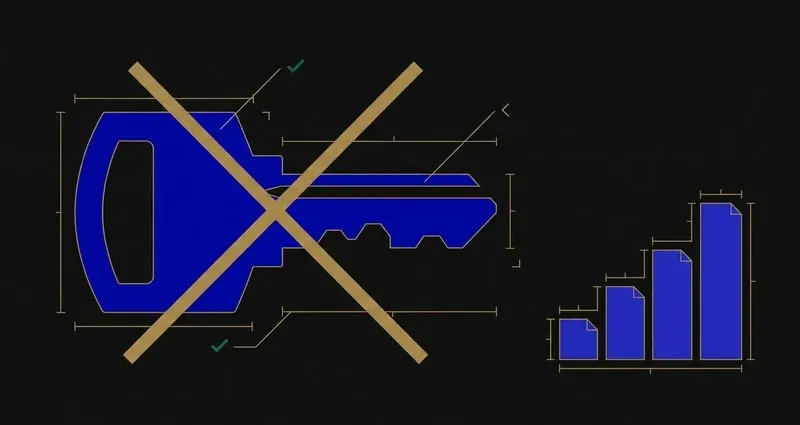
There is no student-facing Edgenuity answer key, and there cannot be a single one, because there is no single Edgenuity course.
Teachers do have access to assessment questions and answers from the educator side of the platform, and that's where a lot of the uploaded material originally leaks from. But that access is per-course, for the specific version the teacher runs.
Why your version is different
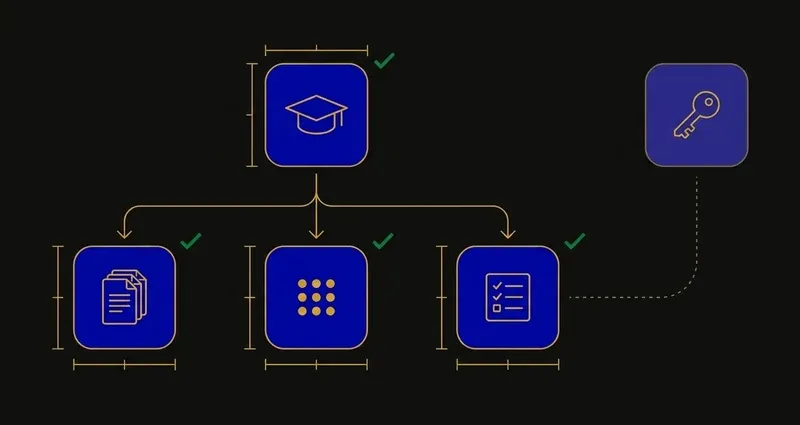
Edgenuity is sold to districts, and districts configure it. "One course" isn't actually one thing once it reaches a classroom.
Unit order and content
Which units are included, and in what sequence, is a local decision made per district.
Question pools
Each assessment draws from a pool a district sets up, so the items two students see can differ even under the same course title.
Attempt limits
How many tries a quiz, test or exam allows is a teacher setting, not a platform constant.
Review options
Whether you see no review, your own answers, or correct answers with explanations depends on how that assessment was configured.
Two students in different districts both "doing Edgenuity Biology" can be working through materially different courses. Two in the same district with different teachers can have different attempt limits on the same quiz. So an uploaded answer key is a snapshot: one district, one configuration, one school year, and the overlap with yours is invisible until you're relying on it.
A key can only describe the course it was captured from. It was never able to describe yours, because your version didn't exist yet when it was made.
The matching-title myth
A PDF titled "Edgenuity Algebra 2 Answer Key" reads like proof. It isn't. A title is just what the uploader typed into a filename box; it says nothing about which district's question pool, unit order or school year the content was captured from. Two files can carry the identical title and hold different questions.
A worked example: same title, two different files
Search "Edgenuity Chemistry Unit 4 Answers" and two PDFs come back, titled almost identically.
The first, uploaded in 2023, came from a district that ran a nine-lesson Unit 4 with review-with-explanations turned on. The second, from 2025, ran a seven-lesson version sourced from a narrower question pool, review off entirely.
Neither uploader lied. They're keys for two different courses sharing a title and unit number. Nothing in the filename says which one, if either, was yours.
Why the mismatch gets worse over time
Courses are updated, and districts change configuration between years. A deck that was genuinely useful to its author in 2023 may describe a course that no longer exists in that form, and the decay is silent: there's no version stamp telling you a set was built against a different unit ordering. You find out when the answer you were confident about isn't among the options.
What partially works, and where
Quizlet and similar decks work best where the content is standard: vocabulary, definitions, formula recall. Worst on anything built around a specific passage, figure or data set your version supplied.
Brainly, Chegg and homework sites answer the academic question rather than your Edgenuity item. Good on maths, weaker on anything tied to course-specific material.
Answer databases inside bots inherit the same problem, worth knowing before you pay for one. See the main Edgenuity bots compared.
Reading your actual question is the only approach immune to the configuration problem: it assumes nothing about which version you were assigned. It doesn't retrieve a stored answer; it works one out from what's rendered on your screen. More in Edgenuity answers explained.
The bigger cost
Everyone focuses on the risk of an answer key. The larger cost is usually time.
Students routinely spend hours hunting for a key, cross-referencing partial matches, second-guessing whether an answer from a different course version applies. That time doesn't compound; you do it again next unit, because the next unit is a different snapshot with the same problem.
Compare that with the twenty minutes it takes to fill in the guided notes while the instruction plays, which produces a study guide built from your own course. See Edgenuity guided notes.
What to do with all this
Three practical conclusions.
First, stop treating a matching title as evidence. It tells you what a file is called, not which district's course generated the questions inside it.
Second, budget for the search itself, not just the risk. The hours spent hunting rarely pay off, and even a "good" match only covers part of an assessment.
Third, the only approach that skips the configuration problem never depends on a stored key: reading the question the moment it's on your screen, rather than looking it up in a bank built from someone else's course.
That's also the fastest path to actual answers on your specific course: see getting Edgenuity answers.
Frequently Asked Questions
Is there an official Edgenuity answer key?
Not one available to students. Teachers have access to assessment questions and answers through the educator side of the platform, but there is no single student-facing key, because each district configures its own version of a course.
Why don't Edgenuity answer keys match my questions?
Because they were captured from a different district's configuration, often in a different school year, with a different question pool and sometimes a different unit order.
Do Quizlet sets work for Edgenuity?
Partially and unreliably. They tend to work best where the underlying academic content is standard and worst on items built around a specific passage, figure or data set from your version of the course.
If a PDF is titled with my exact course name, is it safe to trust?
No. A title only describes what the uploader called the file, not which district, question pool or school year it was captured from. Two courses can share an identical title and hold different questions underneath it.
Does SnoopSolve give you an Edgenuity answer key?
No. SnoopSolve doesn't store or sell a key. It reads the question rendered on your own screen and works out the answer from that, which sidesteps the district-configuration problem instead of running into it.