Edgenuity Actual Grade vs Overall Grade — Why Yours Is Dropping
Two numbers. One report card. The number on your screen is flattering you. Here's the one that isn't, the formula behind it, and a worked example of exactly how far apart they can get.

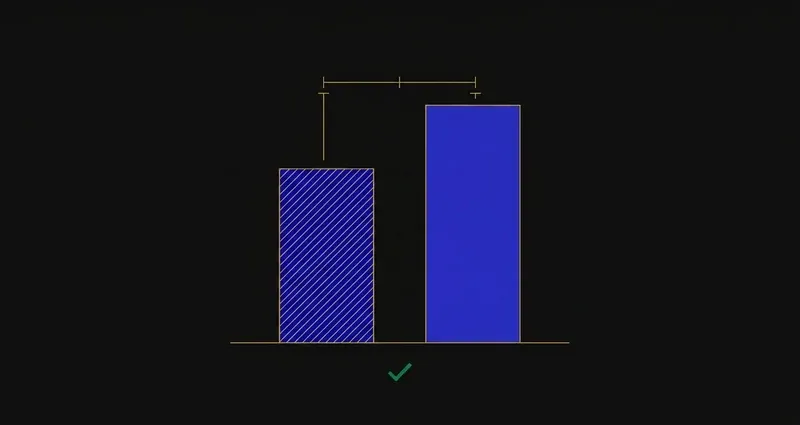
Two numbers, and only one of them counts
Edgenuity shows you a grade in more than one place, and the numbers disagree. It's the single most common source of confusion here, and it's not a bug.
Overall Grade is your performance on the work you've actually submitted, averaged according to the course's configured weights. Do six things and score well on all six, and this number looks great, no matter how much of the course is still sitting untouched.
Actual Grade counts everything not done yet as a zero:
Actual Grade = (Completion ÷ Target Completion) × Overall Grade
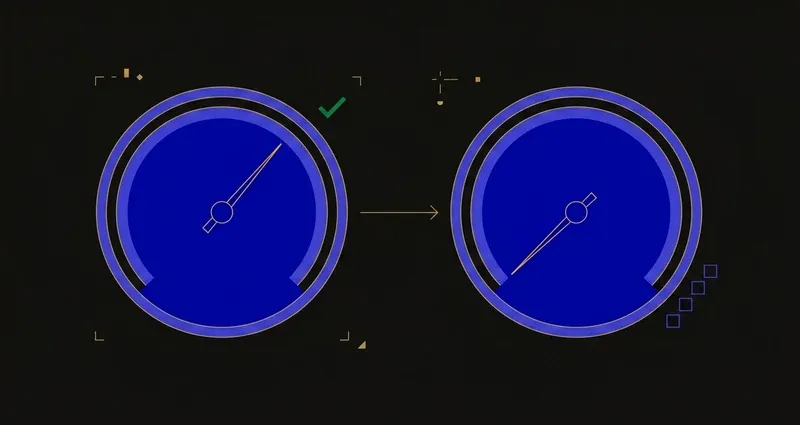
Falling behind isn't a paperwork problem you clean up later. On Edgenuity, it's graded in real time, every day you're behind, whether you log in or not.
Which one matters
The Actual Grade. It's typically the one recorded into the student information system, used for report cards, progress reports, and sports and activity eligibility.
The number that feels like your grade is the one that flatters you. The number that goes on your record is the one that doesn't.
Why this catches everybody out
Because it inverts the usual mental model of a grade.
In a normal class, work you haven't done yet simply hasn't happened; missing homework hurts you later, when it's overdue.
Edgenuity applies the penalty continuously and immediately. A target completion percentage moves as the term progresses, and the moment you fall behind it, your recorded grade starts sinking, even if you've never scored below 85 on anything you've submitted.
The straight-A's trap
"My scores are all A's, so my grade must be fine" is the exact misconception the Actual Grade formula exists to correct. Overall Grade only looks at what you turned in; it has no idea how much of the course is still untouched. A perfect scorecard gets multiplied against a completion ratio, not added to it, so the number on your report card can land nowhere near your scores.
A 94-average student watches her number crater mid-term
Mia never scores below the high 80s. Her Overall Grade sits at a steady 94% all term. Here's what her Actual Grade does at three checkpoints:
| Checkpoint | Target completion | Her completion | Overall Grade | Actual Grade |
|---|---|---|---|---|
| Week 2 | 20% | 20% | 94% | 94% |
| Week 6 | 55% | 30% | 94% | 51% |
| Week 10 | 85% | 85% | 94% | 94% |
Nothing about her scores moved. A family trip and a busy sports schedule put her 25 points behind target completion by Week 6, and the formula did the rest: (30 ÷ 55) × 94 ≈ 51. An A-average student was suddenly failing, on paper. By Week 10, once she'd closed the gap back to target, the same 94% Overall Grade produced a 94% Actual Grade again: no scores retaken, nothing re-graded.
The swing from 94 to 51 and back to 94 was entirely about when the work got done, never about how well it was done.
How to fix it fastest
The formula tells you exactly what to prioritize, and it's not what most students instinctively try.
Clear the backlog first
Every finished item removes a zero from the completion side of the formula: the fastest lever available, faster than polishing something already submitted.
Skip the retake urge, for now
Turning a 78 into an 88 nudges the Overall Grade a little. Finishing four missing items moves the completion ratio a lot, and that ratio multiplies everything else.
Find your target completion
The moving benchmark the formula compares you against. Knowing it turns 'I feel behind' into 'I need four more lessons this week,' a problem you can solve.
Then chase scores
Once completion catches up, the multiplier sits near 1 and the Overall Grade does the work. That's when retakes are worth the time, and the highest score always counts.
The uncomfortable implication
This is also the honest reason "finish Edgenuity faster" is a legitimate goal, not a euphemism for cheating. A student who is behind is being graded down for being behind; catching up is the intended behavior of the system, not gaming it.
Where that goes wrong is solving a pace problem with automation, which produces a completion history that gets flagged and reset. See how to finish Edgenuity fast for what actually works, and Speed Radar explained for what does not.
One last thing worth checking
Not everything in your queue is worth the same. Course weights apply to quizzes, tests, and exams specifically; Imagine Learning publishes a list of activities that don't influence the course grade at all. Those items still count toward completion, so they're not worthless, but they aren't where a scoring push belongs.
If you're triaging a backlog with limited time, ask your teacher which items carry weight. On a tight deadline, that's worth more than an extra evening spent in the wrong place.
Where this leaves you
First, completion and correctness are graded separately, and both matter: a flawless Overall Grade can't rescue an Actual Grade that's behind on pace, because one multiplies the other down.
Second, the target completion line moves without you: it's tied to the calendar, not your login history, so a quiet week costs you even if you never open the app.
Third, if the bottleneck is speed rather than understanding, closing that gap without guesswork on every question is exactly what SnoopSolve is built for.
Frequently Asked Questions
What is the difference between Actual Grade and Overall Grade in Edgenuity?
The Overall Grade is your performance on work you have actually submitted. The Actual Grade also counts everything you have not completed yet as zeros: roughly, completion divided by target completion, multiplied by the overall grade.
Which Edgenuity grade goes on my report card?
The Actual Grade. It is the one typically recorded into the student information system and used for report cards, progress reports and eligibility checks.
How do I raise my Edgenuity Actual Grade?
Complete unfinished work, oldest first. Because the Actual Grade is driven by completion against target completion, closing the gap raises it faster than improving individual scores does.
Does a perfect quiz score protect my Edgenuity grade if I'm behind on completion?
No. A perfect Overall Grade is multiplied by your completion ratio, not added to it, so a 100% score average still collapses toward zero if completion is far below target. Scores and pace are graded separately, and both have to hold up.
Why does my Edgenuity grade change even on days I don't log in?
Target completion is a moving benchmark tied to the course's pacing guide, not to your activity. It advances on the calendar whether you log in or not, so a day of silence widens the gap between your completion and the target, and the Actual Grade formula reflects that automatically.